
Home / Products / Extinguishers and equipment / Dry chemical extinguishers
Class A · B · C · 7 sizes, 1–50 lbDry chemical extinguishers
The most widely used and most economical type — effective on ordinary solids, flammable liquids and electrical equipment
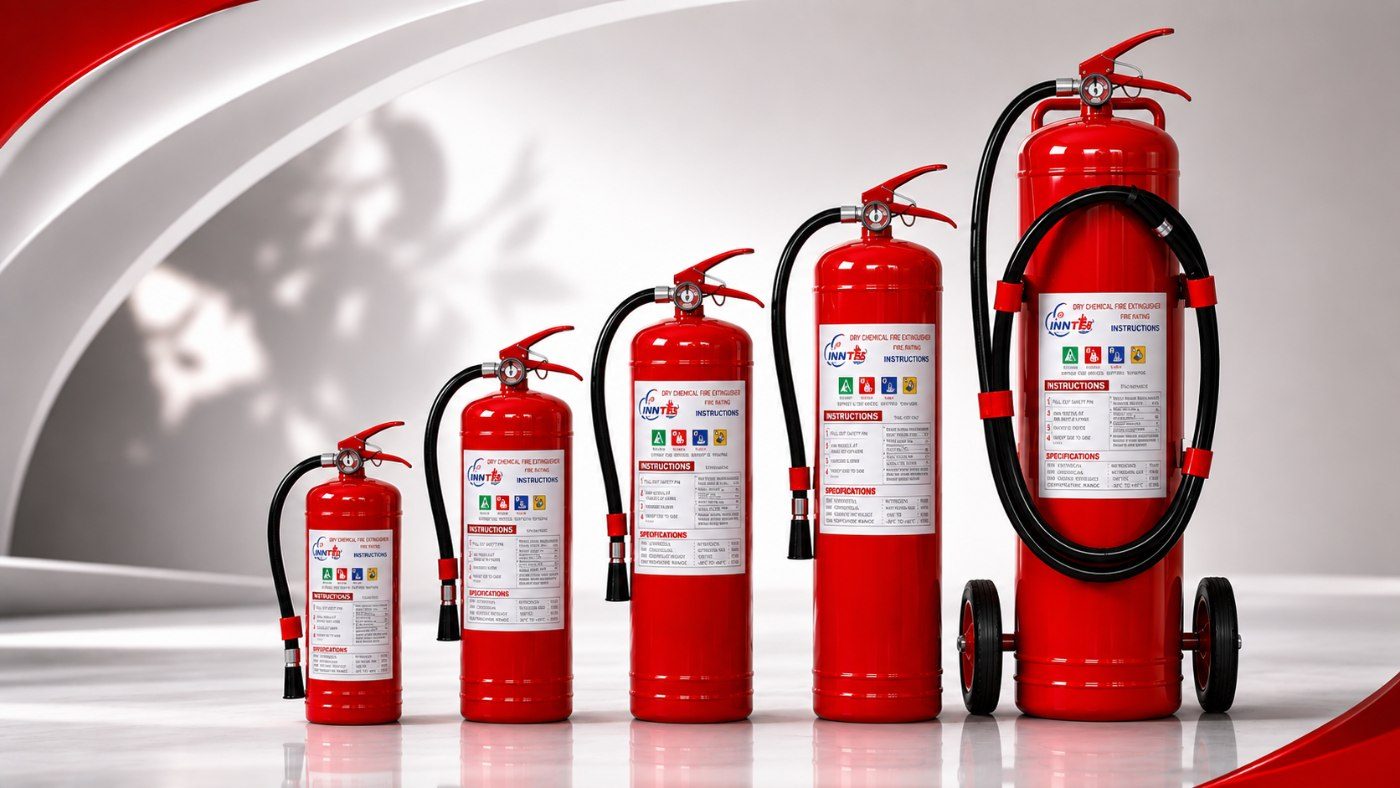
Specifications, all 7 sizes
| Unit size | Agent weight (kg) | Gross weight (kg) | Height (mm) | Diameter (mm) | Pressure (PSI) | Discharge time (s) | Discharge range (m) |
|---|---|---|---|---|---|---|---|
| 1 lb | 0.453 | 1.2 | 260 | 65 | 175 | 10 | 2–3 |
| 2.2 lb | 1.0 | 1.8 | 300 | 90 | 175 | 10 | 2–3 |
| 5 lb | 2.3 | 3.6 | 385 | 114.5 | 195 | 10 | 4–6 |
| 10 lb | 4.6 | 6.8 | 510 | 137.5 | 195 | 15 | 6–8 |
| 15 lb | 6.8 | 9.3 | 555 | 151.5 | 195 | 20 | 6–8 |
| 20 lb | 9.0 | 12.8 | 610 | 176 | 195 | 25 | 6–8 |
| 50 lb | 23.0 | 41.8 | 970 | 200.5 | 195 | 35 | 6–8 |
The propellant in the 5–50 lb models is nitrogen (N₂)
How to choose the right size
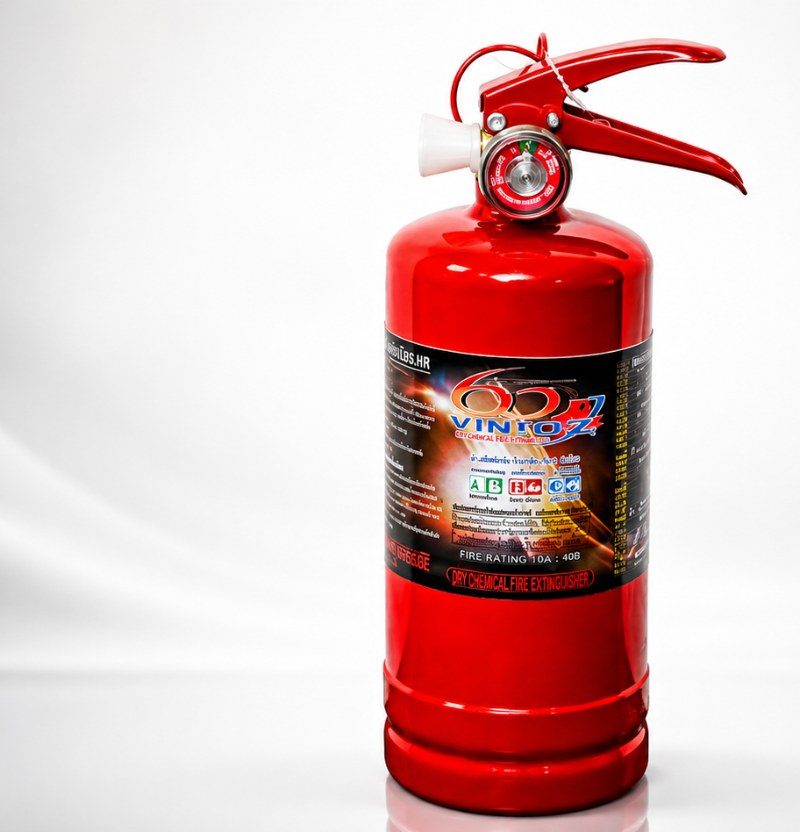
Portable models, 1–2.2 lb
Small enough for a car, a home kitchen or a condo unit. Ten seconds of discharge, 2–3 m range — suitable only for a fire that has just started. If it has spread, leave the area and call the fire service.
1–2.2 lb
Portable — cars, home kitchens, condo units. Ten seconds of discharge, 2–3 m range, for a fire that has only just started.
5–15 lb
The standard size for buildings, offices, shops, condos and hotels — and the size building inspectors usually specify.
20–50 lb
Factories, warehouses and high-risk areas. The 50 lb model is wheeled, because at 41.8 kg gross it cannot be carried by hand.
How it works
The powder is expelled to blanket the burning surface, smothering the area and cutting off the oxygen the fuel needs, so the fire goes out.
On discharge it produces a cloud of fine powder, so it suits open areas — and the residue has to be cleaned up afterwards.
Standards and warranty
- The cylinder is formed from SPCEN steel to JIS standard
- Carries the TIS 332-2537 mark
- Rated for fire classes Class A · B · C
- 5-year product warranty, with a free check every 6 months
It must be refilled after every use — whether the agent is fully spent or not, because the pressure has dropped and it will not discharge next time. This is the number one reason an extinguisher fails when it is actually needed.
Not suitable for some fire classes — metal and lithium battery fires (Class D) need an AVD unit, and hot cooking oil in a commercial kitchen (Class K) needs FireAxz or a purpose-made kitchen unit.
Request a Quote
Send us the sizes and quantities you need, or the building drawings. We work out the number of units and where they go, with a quote within one business day.
Request a Quote